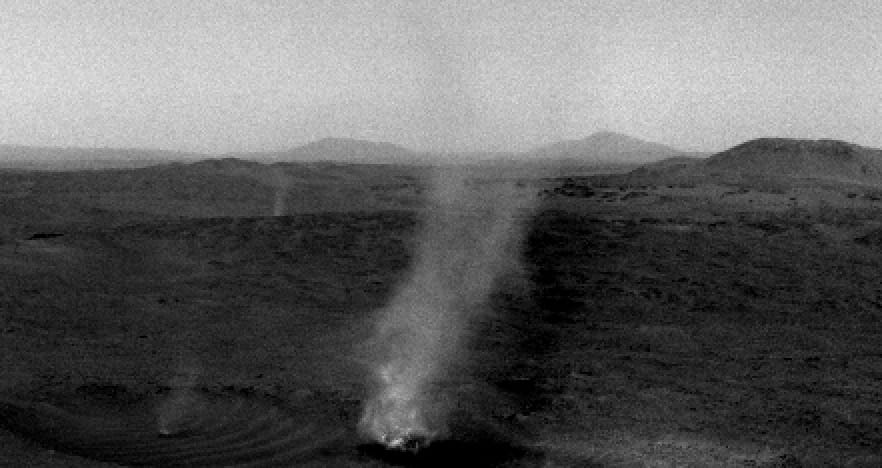
In a groundbreaking revelation, NASA’s Perseverance rover has confirmed the presence of electrical discharges—mini lightning bolts—within Martian dust devils. This phenomenon, long theorized but never before recorded, was captured through both audio and electromagnetic data by the rover’s SuperCam microphone.
The discovery, published in the journal Nature, occurred when a dust whirlwind passed directly over the rover in October 2024. Scientists initially mistook the sharp “snap” in the audio for a grain of sand hitting the microphone. However, upon consulting with atmospheric electricity experts, they realized the acoustic signal matched that of an electrical discharge.
Crucially, this acoustic snap was preceded by electromagnetic interference—a signal previously dismissed as a hardware flaw. The thin Martian atmosphere, only about 1% as dense as Earth’s, makes it much easier for friction between dust grains to trigger an arc. These sparks are roughly equivalent to the static shock one feels after walking across a carpet and touching a metal doorknob on Earth.
This discovery has profound implications for our understanding of Martian atmospheric chemistry and climate. The electrical discharges may explain the rapid disappearance of methane from the Martian atmosphere—a mystery that has puzzled scientists for over two decades. The discharges break down methane and water vapor into reactive chemicals at a much faster rate than expected.
Moreover, electricity plays a central role in lifting fine dust into Mars’s atmosphere, a critical step in forming planet-wide dust storms. These findings are not only reshaping our scientific understanding but also have practical implications for future human missions to Mars, which will need to account for this constant electrical activity.
References
- NASA Rover Detects Electric Sparks in Mars Dust Devils, Storms
- Perseverance on Mars: Flashes Detected by Accident Could Change Our Understanding of the Red Planet
- NASA Rover Detects Electrical Discharges, 'Mini-Lightning', on Mars
- Tiny Sparks of Lightning Detected on Mars for the First Time
Members Discussion